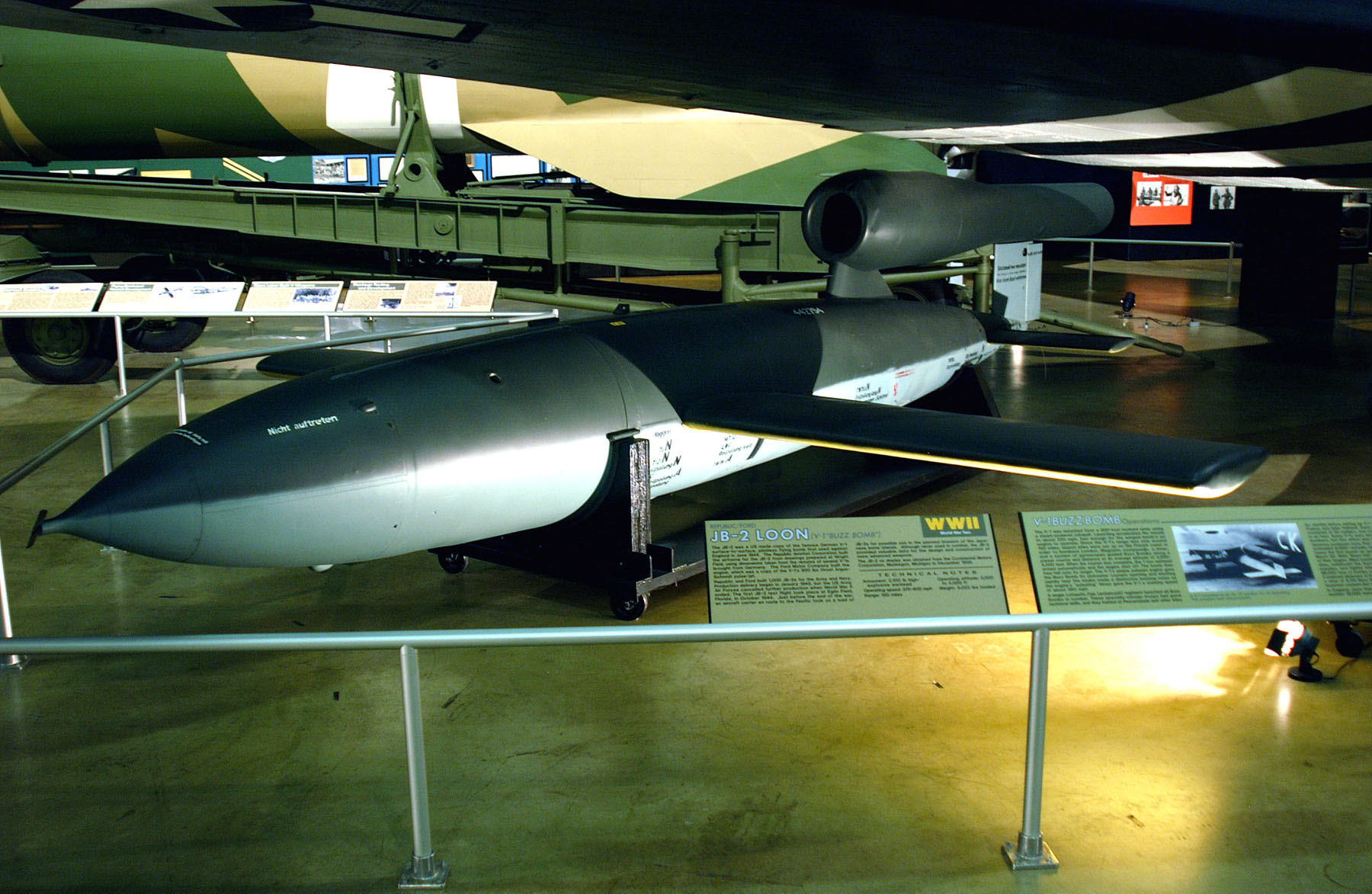
Buzz Bomber Ww2
The buzz bomb’s revolutionary engine, the Argus As 014 pulsejet, was designed in 1928 by inventor Paul Schmidt. The motor, which ran on ordinary gasoline, fired 50 times a second, giving the V-1 its unmistakable and terrifying sound (♬ listen here). Jan 03, 2020.10 Fastest World War II Aircraft. While speed was not the essential design quality to a successful aircraft during a war, but somehow it was certainly a benefit. In this video we present you.
The WWII V-1 Doodle Bug Flying Bomb
The German V1 flying bomb, or 'buzz' bomb, known originally as the Fieseler Fi 103, was the first of the Vergeltungswaffen 'weapons of vengeance,' named in response to Allied air assaults on Germany during World War II. It emerged from proposals made in 1939 by the Argus Motorenwerke.
Although prone to mechanical failure and vulnerable to fighters, barrage balloons, and anti-aircraft fire, the V-1 nevertheless caused great destruction to targets in England and Belgium. Troops and civilians subjected to these attacks nicknamed them 'doodlebugs' or 'buzz bombs'. The flying bomb concept can be seen today in the modern cruise missile. |
Iceborne mega-update. Monster hunter world monster list.
|
Allegiance benefit plan management appeal form.
Development
After World War 1 (1914-1918) and the restrictions placed upon German industry - particularly its war-making capabilities - several projects were undertaken in secrecy or under the guise of civilian market operation. This proved the case with the He 111 which was developed as a fast medium bomber posing as a fast passenger airliner. The design was headed in the early 1930s by brothers Siegfried and Walter Gunter who, at that time, brought little experience to the table. The record-setting Henkel 70 was used as the starting point as this aircraft was specifically made for fast passenger and mail transportation. its design showcased a very streamlined form with elliptical wing mainplanes and 324 of the type were eventually realized with local production also seen in Hungary.
The Model 70 was revised into a twin-engine layout, the nose-mounted engine removed and the engine pair now fitted to the wing leading edges. The high-performance elliptical wings were retained though lengthened and attention was given to the fuselage with was also extended. A stepped cockpit was used and the engine of choice became the relatively underpowered BMW VI 6.oZ piston engine of 660 horsepower (each) for heftier engine breeds were being reserved for 'true' military aircraft. A single vertical fin was seated at the tail along with low-set horizontal planes - all well-rounded for aerodynamic efficiency. The fuselage was very tubular and the wing mainplanes set low along its sides. The undercarriage featured two single-wheeled main landing gear legs under the mass of the aircraft with a diminutive tail wheel under the aft section (the tail wheel only partially retractable into the fuselage). First flight was recorded on February 24th, 1935 - the prototype being He 111 V1 under a civilian registration - and the resulting flight proved the design sound on the whole though maximum speed was limited to 225 miles per hour. V2 followed, also with civilian markings, but incorporated refined wings, various engine installations from BMW, and other general upgrades to reach speeds in the 255 mile per hour range.
By this time, Heinkel was in direct competition with a Junkers design (the Ju 86) and the Dornier Do 17 but all three were supported by the German Air Ministry. Performance of the Ju 86 resulted in limited interest and Junkers then moved onto bettering its classic Ju 88 product. The Do 17 was adopted to replace the Heinkel Model 70 and the He 111 was continually evolved through extensive work.
A- and B-Models
Ten trials He 111 A-0 aircraft followed as did another prototype (V3) for further evaluation. The V3 was selected as the primary serial production model and the ten pre-productions were then later sold off to China. With Daimler-Benz DB 600Aa inline engines installed, the aircraft was formally received into Luftwaffe service as the He 111 B-0 and production models bore the He 111 B-1 designation while being powered with Daimler-Benz DB600C engines. The He 111 B-2 was given DB 600GG engines (later DB 600Ga engines) but was more or less faithful to the B-1 and B-3 served as a trainer.
C-, D-, and E-Models
He 111 C-0 was used to signify six additional pre-production airframes which led to the He 111 D-0 production models with longer range capability and updated equipment. He 111 E-0 marked more pre-production aircraft built from the B-0 models though with Junkers Jumo 211 A-1 engines. Its production form became the He 111 E-1 and the E-3, the latter with Junkers Jumo 211 A-3 engines. The E-4 brought about use of external hardpoints and E-5 added more internal fuel storage for improved ranges.
F-Models
The He 111 F-0 served as a pre-production mark while being based on the E-5 models of earlier. The wings were refined for a more simplified construction approach and the aircraft outfitted with Junkers Jumo 211 A-1 series engines. Its production mark became the He 111 F-1 and about two dozen were sold to Turkey in an attempt to woo the Asian power into supporting the Axis cause. The He 111 F-2 then followed in twenty production aircraft and were largely the F-1 model though with an improved communications system. The F-3 became an unrealized reconnaissance-minded derivative that utilized camera equipment instead of the regular bomb load. The F-4 were F-models converted as staff communications platforms.
G- and J-Models
G-models followed as transport-minded aircraft with the G-0 serving as pre-production aircraft based on the F-0 form. The G-3 was outfitted with BMW 132Dc radial piston engines and the G-4 with Daimler-Benz DB 600G inline piston engines. G-5 numbered five airframes for Turkey powered by DB 600Ga engines. The He 111 J-0 was the pre-production torpedo bomber form based on the F-4 model and powered by 2 x DB 600CG engines. Its production guise came in the He 111 J-1 and 90 were seen in all.
The Revised He 111 P-Model
The drastically revised He 111 form - with its all-glazed cockpit flightdeck arrived in the He 111 P-series lead by the P-0 pre-production aircraft in 1939. A new straighter wing element was implemented as were Daimler-Benz DB 601Aa series engines. Along the belly of the aircraft was added a gondola for observation purposes as well as another (improved) defensive machine gun position. The production form became He 111 P-1. P-2 included better radio kits and defensive machine guns were increased form three to five. The trainer variant was the P-3 (crew) and the P-5 (pilot) while P-4 added additional armoring and machine guns, external bomb racks, and additional fuel stores. Some of the following P-6 models used DB 601N engines until their supply became restricted for German fighter use. P-6/R2 was used as a glider tug as was the P-9.